iNTRODUCTION
Michael Sangster
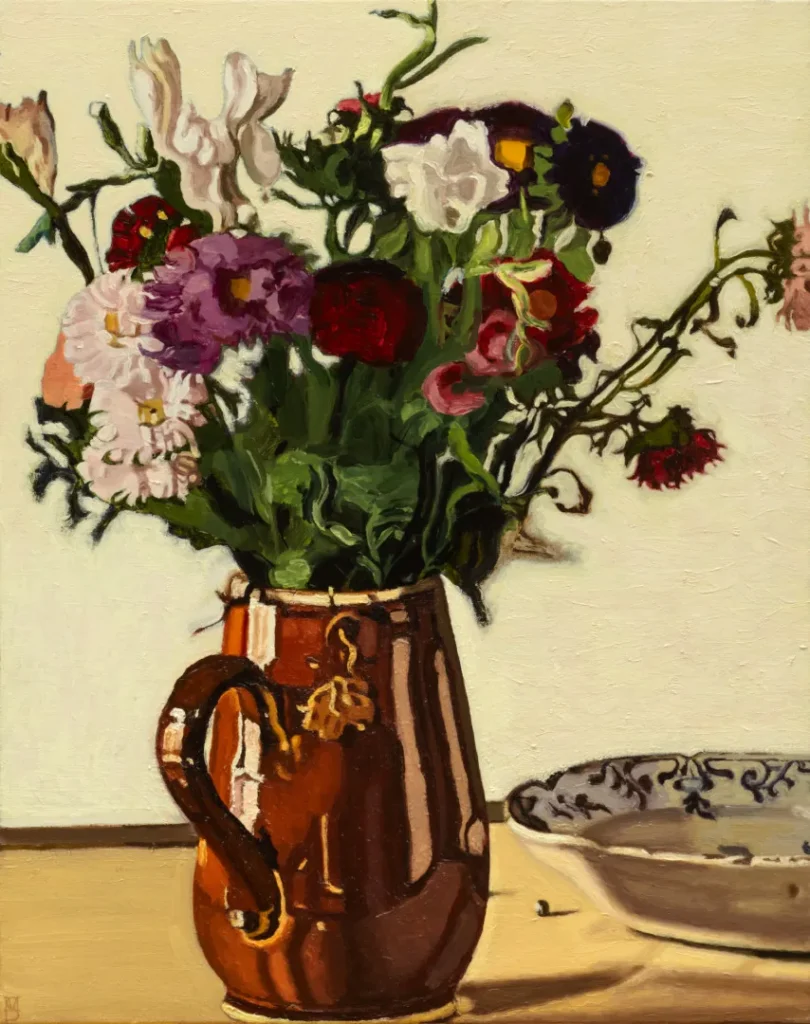
Michael Sangster is a painter of the world around him, be it interiors and still life, exterior views and landscapes, or portraits. Initially trained in the Euston Road School of painting from the model, at Chelsea School of Art, he went on to develop more tradition based skills at the Royal Academy Schools.
Both schools of painting, despite their differences, placed great emphasis on the training of observation – the accurate and analytic observation of things seen. This apprenticeship in naturalism chimed well with an incipient delight in things and surroundings that stems from the painter’s upbringing in the Cheshire countryside.
Michael Sangster lives in London and although the work has developed in scope, scale and treatment, he continues to work strictly from observation.


Modernity & Tradition
It has often been said that the present only occupies an instant between arriving from the future and becoming the past. Try to put your finger on the present and it’s already gone. ‘
You can’t step into the same river twice’, Heraclitus observed.
If the present is continually becoming the past, it follows that the past is always joined to the present. Modernity then, is a continuation of history and is in part the product of what went on before. Tradition, the accumulating store of great works of the past, is therefore necessarily a part of modernity, and cannot be separated from it. T.S. Eliot put it succinctly:
‘Tradition: how the vitality of the past enriches the life of the present’.
In our experience of the present, modernity & tradition pass imperceptibly into each other. One does not have to make a self-conscious return to tradition, it will come to you when you least expect it.
Naturalism
Naturalism in painting refers to the realistic representation of man and his surroundings. It has been the core practice in Western art since Giotto (1267? – 1337) and the early Renaissance, and extends back to ancient Rome, Greece, Egypt and ultimately the cave paintings of pre-history.
The advent of Abstraction in the 20th Century ran counter to this prevailing disposition but Naturalistic painting continued nevertheless. To the Western mind, nature has long been held in reverence. It is almost instinctive in us to think of nature as a source of good.
For the painter, drawing from nature means to turn the gaze outward in order to study something infinitely complex and wonderful. In short, even if it is merely light and shadow on a wall, nature is infinite and the study of it opens the mind to the undying and the universal.